Designing end-to-end experience for college students using digital courseware
I led the redesign of the end-to-end course access user experience for Cengage student users. This was part of a brand reorientation to move away from the print-based, instructor focused model and toward a digital first, student focused one.
Project Details
My Role
I directed and managed the design and research teams (2 UX designers, a visual designer, a UX researcher and a front end developer) and was the point person for a collaborative team of stakeholders, responsible for driving the vision, and iterating quickly on concepts, as part of an agile environment.
Results
New interface and experience design completed and on time with first quarter resulting in $10.2M annual additional net revenue.
The challenge
Traditionally, publishers like Cengage have focused on the needs of the higher ed instructor and institutions because they controlled the purchasing power. Now though, students have more choices. They don’t have to buy from the big publishers. They can rent, borrow, or buy in the secondary market, and they can put pressure on instructors to use products that they prefer.
Additionally, customer support data indicated that many students were confused about where and how to find the products they were required to use. Before every semester there was a surge in help tickets for preventable mistakes, like buying a similar product but not the actual one the teacher assigned.
The Product Strategy
Shift from
instructor-centered
to
student-centered
During the fall rush period 43% of the Cengage tech support cases were issues about getting access to the right product.
Identifying problems through research and analysis
Using the results of their a long qualitative research study with 21 Cengage students we observed and learned about the struggles and context of student lives. Methods included: online journal diaries, video diaries, and interviews.
Research
Several themes emerged for our main persona.
Prototyping
We created several rapid prototypes and conducted user testing with students in nearby campuses and in coffee shops, then synthesizing and reviewing the results. Here's one I created.
Concepts
Initial concepts focused on more personalization and mixed in actual partner products with potential partner products to suggest partnerships for the future.
User Testing
We performed continuous user testing with clickable online prototypes or paper prototypes and provided feedback and analysis for each new iteration.
The process was inclusive of all stakeholder teams .
Development
As we refined the design, I created high fidelity prototypes in Axure to A/B test and compare the effectiveness of 2 solutions in terms time and effort spent to get to the digital course. We tested this in person with 15 students and used the data to refine the design further.
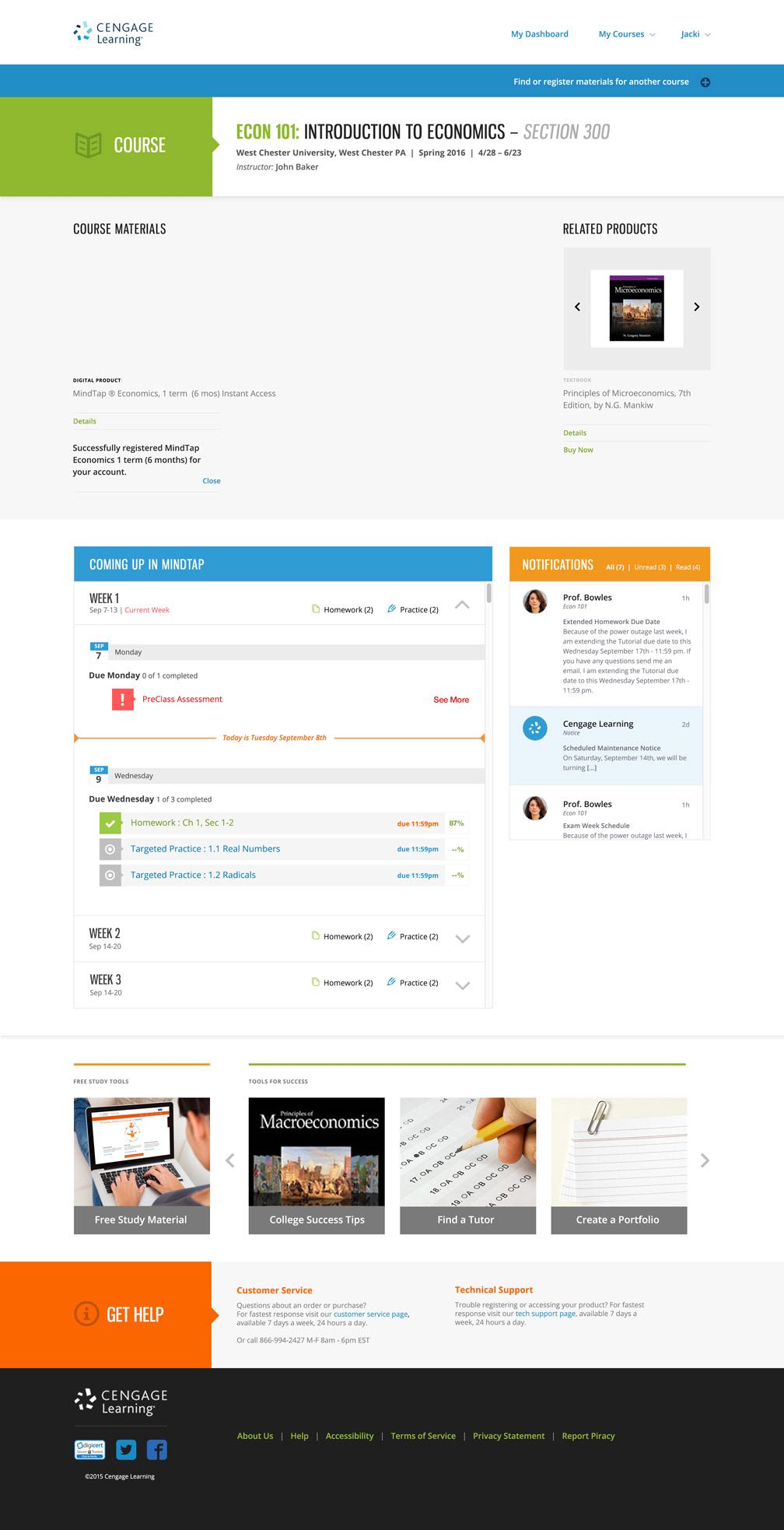
Launch
Released first quarter 2015, the new user experience, with streamlined navigation to dashboard and digital course access released on time and resulted in $10.2M annual additional net revenue.


.svg)